Marketing dashboard consulting for agencies: Why it improves client retention
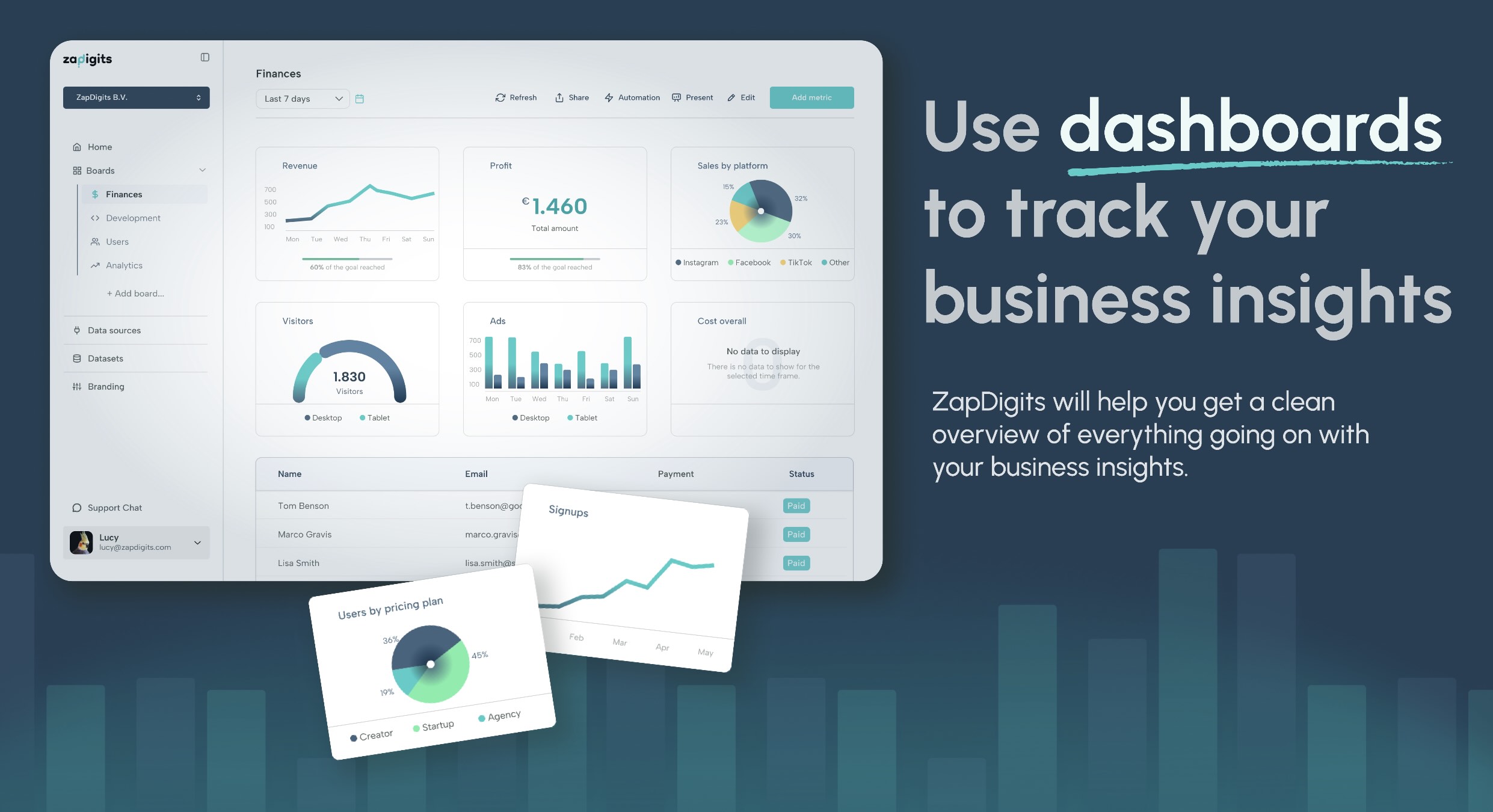
Client retention is the difference between a stable agency and one that is constantly chasing the next contract. Most agencies lose clients for one simple reason: reporting feels confusing, disconnected, or underwhelming.
That is where marketing dashboard consulting becomes valuable.
When done properly, marketing dashboard consulting helps agencies turn scattered marketing data into clear business narratives. It aligns metrics with outcomes, improves client confidence, and strengthens long term relationships.
This article explains why marketing dashboard consulting matters for agencies and how it directly impacts client retention.
The Real Reason Agencies Lose Clients
Clients rarely leave because ads stopped working for a week. They leave when they feel uncertain.
Common agency reporting issues include:
- Too many vanity metrics
- No link between campaigns and revenue
- Inconsistent numbers across platforms
- Manual spreadsheets that create delays
- Reports that focus on activity instead of impact
If a client cannot clearly answer, “What am I getting for my money?” retention becomes fragile.
Marketing dashboard consulting addresses this root problem.
What Marketing Dashboard Consulting Actually Means for Agencies
Marketing dashboard consulting is not just building charts.
It involves:
- KPI alignment with client business goals
- Data source integration
- Metric standardization
- Attribution logic clarification
- Dashboard UX design
- Reporting workflow automation
A consultant evaluates how an agency collects, organizes, and presents data, then designs a structured reporting system that is easy to maintain and easy for clients to understand.
For agencies juggling tools like Google Analytics, ad platforms, CRMs, and email systems, this structure is critical.
How Marketing Dashboard Consulting Improves Client Retention
1. It Aligns Metrics With Business Outcomes
Most dashboards are channel focused. They show clicks, impressions, cost per click, and engagement.
Clients care about revenue, pipeline growth, and return on investment.
Marketing dashboard consulting reframes reporting around business impact:
- Cost per acquisition
- Customer lifetime value
- Marketing sourced revenue
- Pipeline contribution
- Blended return on ad spend
When reporting connects marketing to financial results, clients see value more clearly. Clear value reduces churn.
2. It Creates a Single Source of Truth
Agencies often pull data from multiple systems:
- CRM systems like HubSpot
- Paid media platforms under Meta Platforms
- Analytics tools
- Email marketing software
Without standardization, numbers rarely match across platforms.
Marketing dashboard consulting introduces:
- Defined attribution rules
- Unified naming conventions
- Consistent date ranges
- Centralized reporting infrastructure
When clients stop questioning numbers, trust increases. Trust is the foundation of retention.
3. It Reduces Reporting Friction
Manual reporting drains agency time and increases the risk of errors.
Consulting typically results in:
- Automated data pipelines
- Real time dashboards
- Scheduled executive summaries
- Standardized client reporting templates
This frees up account managers to focus on strategy rather than exporting CSV files.
From a client perspective, faster reporting means higher professionalism. Agencies that appear organized and proactive are harder to replace.
4. It Positions the Agency as Strategic, Not Tactical
If reports focus only on channel metrics, agencies look like execution partners.
Marketing dashboard consulting elevates reporting into strategic storytelling:
- Why performance changed
- What experiments were tested
- What insights were discovered
- What decisions should be made next
This shifts conversations from “How many clicks did we get?” to “Where should we invest next quarter?”
Strategic partners have stronger retention than task based vendors.
5. It Supports Executive Level Conversations
Many agencies build dashboards for marketing managers. But decision makers often sit at the executive level.
Marketing dashboard consulting encourages layered reporting:
- Operational dashboard for campaign managers
- Performance dashboard for marketing leads
- Executive dashboard for founders or CEOs
Executive dashboards are concise and focused on growth indicators.
When leadership understands the impact of marketing without confusion, agency relationships become more secure.
The Competitive Advantage for Agencies
Agencies compete heavily on pricing and service scope. Few compete on reporting quality.
Strong dashboard systems create advantages:
- Faster onboarding of new clients
- Clear differentiation in sales calls
- Easier scaling of internal teams
- More confident upsell conversations
When reporting is clean and structured, agencies can demonstrate growth over time with confidence.
Prospective clients often ask to see sample reports. A polished dashboard built through proper consulting immediately signals maturity.
Common Signs an Agency Needs Marketing Dashboard Consulting
If any of these sound familiar, consulting can directly improve retention:
- Each client has a different reporting format
- Reports are built manually every month
- Clients frequently question numbers
- KPIs differ across account managers
- Revenue attribution is unclear
- Churn rate feels higher than expected
These problems compound over time.
Marketing dashboard consulting introduces repeatable systems that stabilize operations and improve client confidence.
The Financial Impact of Better Retention
Retention has a direct effect on agency profitability.
Longer client relationships mean:
- Higher lifetime value
- Lower acquisition cost per client
- More upsell opportunities
- Stronger case studies
- Predictable cash flow
Even a small improvement in retention rate can significantly increase annual revenue.
For agencies, investing in better reporting infrastructure often pays for itself through extended client contracts.
Building a Retention Focused Marketing Dashboard Framework
An effective consulting framework for agencies usually includes:
- KPI Mapping Workshop Identify which metrics truly matter for each client segment.
- Data Audit Review all data sources and identify inconsistencies.
- Metric Standardization Define naming conventions and calculation logic.
- Dashboard Architecture Design Create a clear hierarchy from channel metrics to revenue outcomes.
- Automation Setup Connect APIs and remove manual steps where possible.
- Client Communication Layer Pair dashboards with clear commentary and recommendations.
This structured approach ensures dashboards are not just visually appealing, but strategically aligned.
Why Agencies Should Treat Reporting as a Core Service
Many agencies treat reporting as an operational necessity.
High performing agencies treat it as a product.
Marketing dashboard consulting transforms reporting into a structured asset:
- Documented processes
- Scalable templates
- Consistent client experience
- Measurable performance tracking
When reporting quality becomes a differentiator, agencies gain pricing power and stability.
Final Thoughts
Client retention is rarely about a single campaign result. It is about confidence, clarity, and perceived value.
Marketing dashboard consulting helps agencies:
- Align metrics with business goals
- Eliminate confusion
- Build trust
- Present strategy clearly
- Scale operations efficiently
In a crowded agency market, better reporting is not just operational hygiene. It is a retention strategy.
Agencies that invest in structured marketing dashboard consulting are not simply improving dashboards. They are strengthening the foundation of every client relationship.